






.svg)

What comes next in CX

The VoC Era Is Over. Here's What Comes Next.
Let's be honest about something the industry has been too polite to say.
Voice of Customer, as a category, has failed most of the teams it was supposed to serve.
Not because the idea was wrong. Listening to customers is one of the most valuable things a company can do. But the tools built around that idea. The survey platforms, the NPS dashboards, the insight repositories, were designed to produce reports, not results. They gave CX teams visibility without power. Data without infrastructure. The appearance of listening, without the ability to act.
If you've been using a VoC tool for the past two or three years and you're still spending hours manually aggregating feedback, still presenting insight decks that get nodded at and forgotten, still finding out about customer problems after they've already become crises, that's not your failure. That's the category's.
Zefi was born inside that category. Today, we're leaving it behind.
What we built. What it became.
We started Zefi as a modern VoC platform and a feedback analytics tool. Smart/better tagging, automatic clustering, better-than-manual analysis of what customers were saying across your channels.
It worked. Teams got faster at finding patterns. Insights that used to take weeks to surface started appearing in hours.
But the teams that got the most out of Zefi weren't using it to move faster at the same old job. They were using it differently — as the connective tissue between customer reality and company action. As the data layer every decision ran through. As the thing that made their entire CX operation coherent, auditable, and scalable in a way that hadn't been possible before.
They weren't using a VoC tool. They were operating on infrastructure.
That's what Zefi is now. And we're not going back.
Infrastructure vs. a tool: why the distinction matters
A tool helps you do a job. Infrastructure changes what jobs are possible.
A VoC tool helps your analyst pull insights faster. CX infrastructure means your whole organisation — product, support, marketing, leadership — operates from a shared, continuously updated understanding of customer reality. No analyst required. No quarterly report. No waiting.
The difference is architectural. And it's the difference between a CX team that reacts and one that leads.
Here's what that looks like in practice.
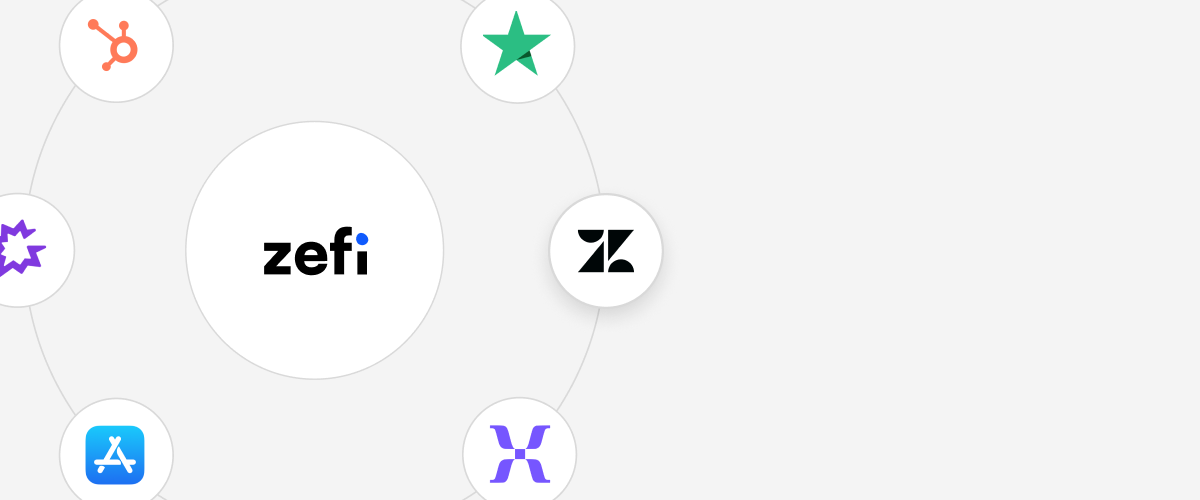
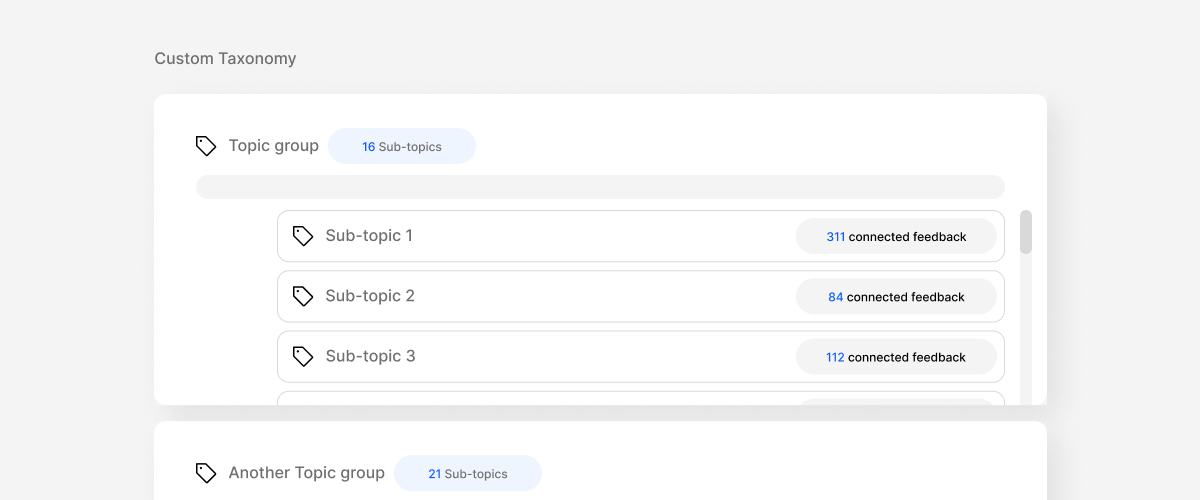
With a tool, you connect a few feedback sources, run some analysis, and export a summary. With infrastructure, every signal, reviews, tickets, NPS, in-app feedback, sales calls, social, flow into a single structured data layer automatically. It's deduplicated. It's reconciled. It's organised according to a taxonomy your team owns and controls, not a vendor's default categories. And it updates in real time, so the picture you're working from is always current.
With a tool, you surface insights. With infrastructure, those insights trigger actions. Automatic workflows, closed-loop responses to at-risk customers, alerts to the right teams before a pattern becomes a crisis. The loop doesn't close because someone remembered to close it. It closes because closing the loop is built into the system.
This is what modern CX teams actually need. Not another dashboard. A foundation.
Why generic AI won't get you there
Every CX leader we talk to is experimenting with AI right now. Most of them are disappointed not because the technology isn't impressive, but because impressive in a demo and useful in production are very different things.
Here's the core problem. Generic AI is stateless. Every session starts from zero. It doesn't know your taxonomy. It doesn't know what you decided last month or what you're tracking this quarter. It can't tell you whether a problem is getting better or worse over time, because it has no memory of time. It produces outputs. It doesn't build knowledge.
Ask ChatGPT to summarise your reviews and you'll get a competent summary. Ask it the same question six months from now, and it will have no idea what changed, what you acted on, or whether it made a difference.
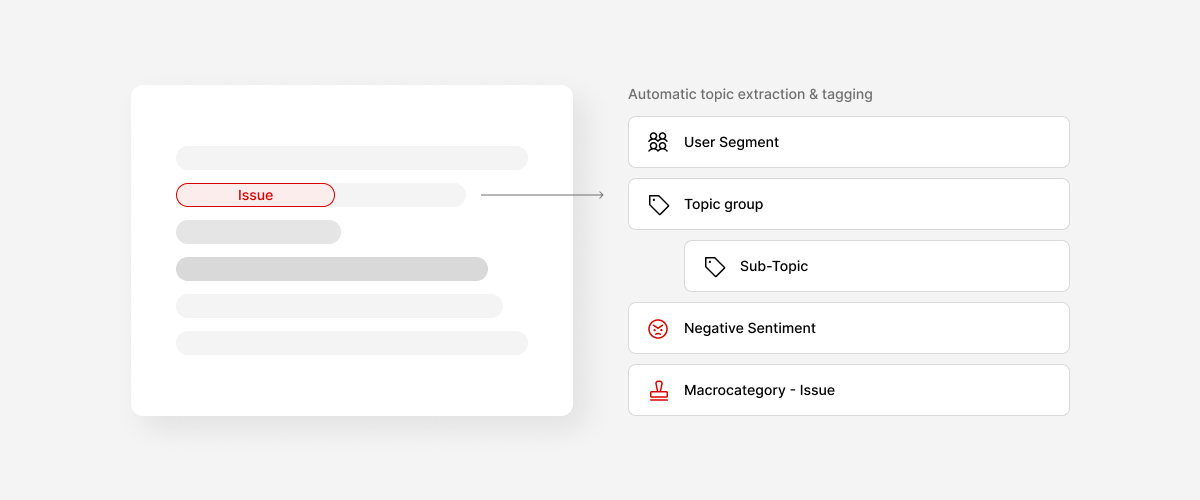
Zefi is the opposite of that. Every insight is anchored to a versioned, auditable taxonomy that your team controls. Every pattern is traceable back to the exact customer signals that generated it. Not a summary, but the source. Every action is recorded, so the system knows what happened and can measure whether it worked.
Persistent. Auditable. Trained on your reality, not just language in general.
That's not a feature set. That's an entirely different category of tool.
Why building it yourself is the most expensive option
Some teams decide to build their own. We get it. Control is appealing. You have engineers. You have opinions about how it should work.
Here's what three years of watching this play out has taught us.
The build always takes longer than planned. The architecture decisions made in month two become painful constraints by month twelve. The person who owned it moves on and suddenly no one understands how it works. The taxonomy drifts. The pipeline breaks. Compliance requirements that got deprioritised become urgent right when you can least afford to deal with them.
And underneath all of it, every month you're in build mode is a month you're not operating on structured, real-time customer intelligence. That's not a sunk cost. That's a compounding opportunity cost. Your competitors who aren't building from scratch are making faster, smarter decisions about customers every single day you're still in development.
We've spent three years building this and nothing else. That focus is what you get when you use Zefi — not just the technology, but the accumulated judgment of a team that has thought harder about this problem than almost anyone alive.
What can you expect
So, what can you expect if you are already on Zefi? You've been living on this infrastructure for a while now, even if we were still calling it something smaller.
The capabilities you rely on are the same. The ambition behind them has just gotten bigger and more explicit. We're building toward a world where every CX team operates on a real-time, structured understanding of their customers as a matter of course, not because they worked to make it happen manually, but because the infrastructure makes it automatic.
That means we're going deeper on data quality, on enterprise-grade security and compliance, on integrations that make Zefi the connective tissue of your entire stack. On making the loop-closing not just possible but inevitable.
You chose Zefi early. What you're going to see next is the company that infrastructure was always capable of becoming.
What this means if you're evaluating Zefi now
If you're a CX or Product leader who has tried the legacy platforms and found them too slow, too rigid, too focused on reports and not on outcomes, this is built for you.
If you're running on spreadsheets, manual tagging, and quarterly insight dumps, this is built for you.
If you're experimenting with AI and finding that it produces interesting outputs but no lasting operational change, this is built for you.
The question isn't whether you need CX infrastructure. Every team at scale does. The question is whether you build it, buy something that almost does it, or use the thing that was designed from day one to be exactly this.
Zefi is the infrastructure layer your CX team was missing. A foundation.
Come see what that looks like in practice.
A member of our team will get in touch soon

Extract value from user feedback
Unify and categorize all feedback automatically.
Prioritize better and build what matters.



.svg)

